
Audience: Designed specifically for non-medical adult learners, this course provides the clear scientific foundation needed to define cancer, classify tumors, and trace the critical process of metastasis.
Role: Instructional Design, eLearning Development, Visual Design, Storyboarding, Action Mapping, Prototyping
Tools Used: Articulate Rise 360, Adobe Creative Cloud, Figma, Adobe XD, Synthesia, Veed.io
The Need
This project addressed a critical need for foundational knowledge clarity regarding the basics of cancer. Learners often approach this subject with fear or misinformation. The goal was to deliver core scientific definitions (cellular function, pathology, spread) in a clear, digestible format that promotes understanding and confidence. The project’s success would be measured by the learner’s ability to demonstrate mastery of fundamental terminology and classification rules in a comprehensive assessment.
The Process
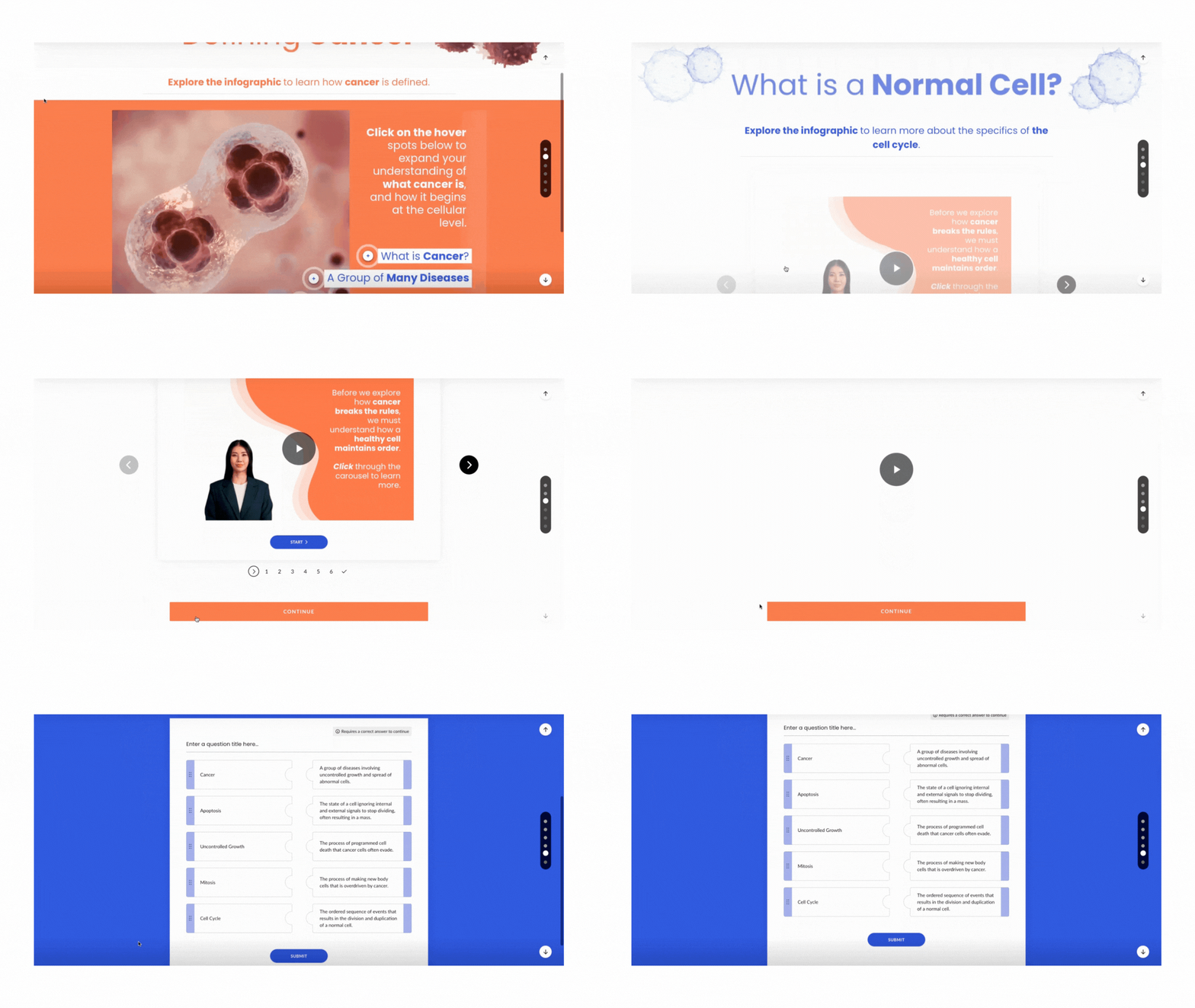
The instructional design process was highly iterative and focused on meticulous content analysis of the provided source material and rigorous adherence to the four core course objectives. The entire course was designed to be built in Articulate Rise 360, utilizing its interactive blocks to facilitate knowledge transfer.
Key methodologies included:
Formative & Summative Assessment Design: Creating targeted interactive elements (Matching Games, Drag-and-Drops, Genially prompts) for formative practice, culminating in a rigorous, multi-format 20-question summative post-assessment.
Objective Alignment: Ensuring every lesson and activity mapped directly back to the course’s four high-level learning objectives (Define, Distinguish, Describe Spread, Describe Types).
Content Chunking: Breaking down the complexity of the subject (cellular processes, tumor types, spread) into four distinct, digestible modules.
Objectives
The overall goal was established by the four core course objectives. Each module was scoped sequentially to meet these objectives:
Module 1: Define the word “cancer” and describe uncontrolled cell division.
Module 2: Define the difference between benign and malignant tumors, and identify the five main cancer types.
Module 3: Apply and analyze all knowledge in a comprehensive post-assessment.
Text- Based Storyboard and Visual Mockups
After objective approval, a detailed text-based storyboard was created using Rise 360’s Markdown format. This process defined the specific Rise 360 blocks (Tabs, Process, Quiz, Sorting Activity) to be used, effectively acting as a visual mockup of the course structure. For instance, the Genially Activity was storyboarded to visualize the dual failures of mitosis and apoptosis.
Interactive Prototype / Iterations
The development relied heavily on continuous iteration based on user feedback. The quiz block content, in particular, served as a “mini-prototype,” undergoing multiple rounds of revision to adjust the difficulty level, change question formats (e.g., from multiple-choice to sequencing), and incorporate highly personalized, effective feedback messages. This refinement ensured the assessment met the “challenging but not incredibly difficult” standard.
Full Development
After multiple iterations and content confirmation, the project resulted in a complete, detailed outline for a four-module Rise 360 lesson. This includes all final text, interactive instructions, and a finalized 20-question graded post-assessment, ready for direct transfer into the authoring tool.
 camilondono.com