
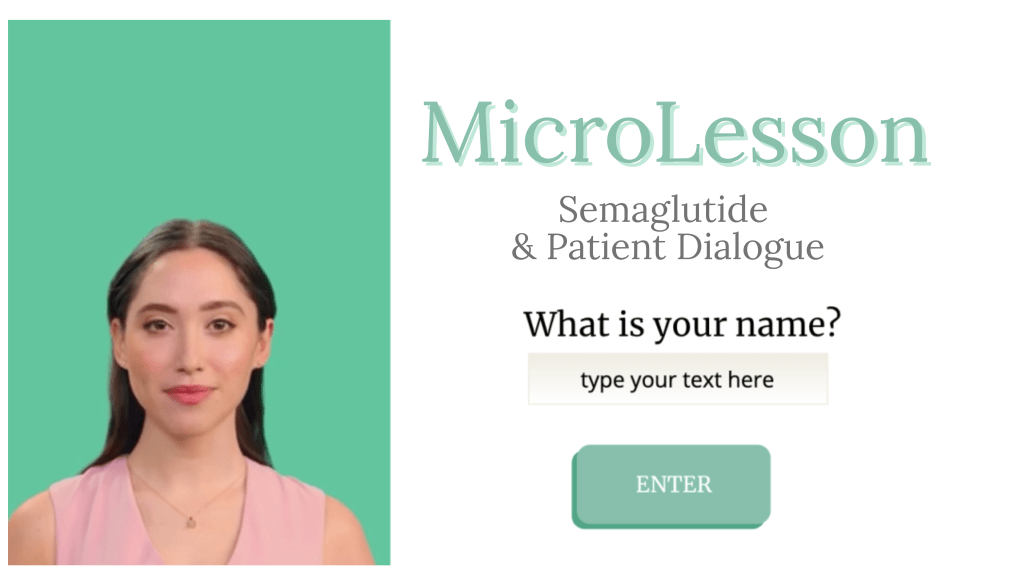
Audience: Registered Dietitians
Role: Instructional Design, eLearning Development, Visual Design, Storyboarding, Action Mapping, Prototyping
Tools Used: Articulate Storyline 360, Figma, Synthesia, WellSaidLabs, Photoshop
The Need
Created for a dietitian retreat, this project helps guide conversations about semaglutide in practice. It addresses the increased use of semaglutide among patients in a six-dietitian practice, two of whom are recent graduates. This first of a two-part MicroLesson series leverages the dietitians’ existing knowledge to explain complex processes in patient-friendly language.
The Process
To guide task analysis, the SME (the owner of the practice) and I went over patient notes. After analyzing the data and talking to three of the dietitians, I realized the area that necessitated further attention was filling knowledge gaps between the provider and the patient. The dietitians who had just been hired cited an issue in being able to inform the patient of everything they needed to know about semaglutide in the thirty-minute duration of the consultation.
The SME and I decided to create lesson topics based on a survey given to the dietitians. Two things were clear: 1) lacking foundational knowledge of key processes of semaglutide and 2) lack of experience in synthesizing technical information into patient-friendly language. Importantly, we decided that a MicroLesson would be ideal since the desired outcome was to review key processes of GLP-1RA or semaglutide. Additionally, the MicroLesson would need to guide the user on how to summarize content when discussing semaglutide.
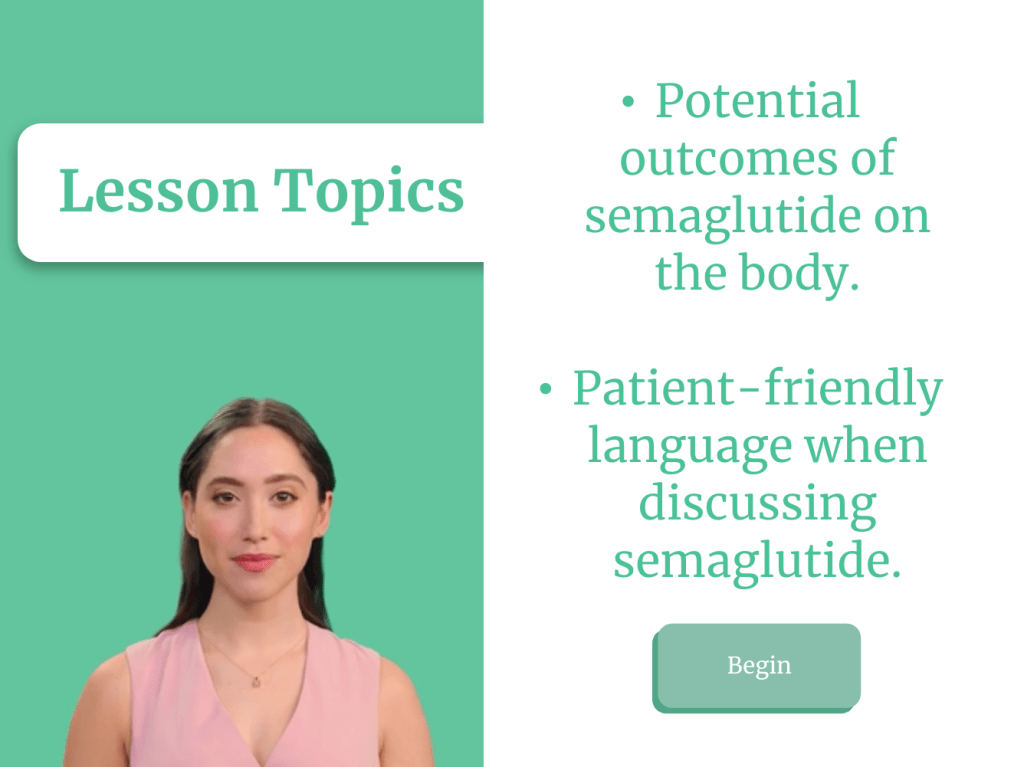
Text- Based Storyboard and Visual Mockup
I began working on a text-based storyboard/ visual mockup after the lesson topics had been established; these delineated basic design decisions.
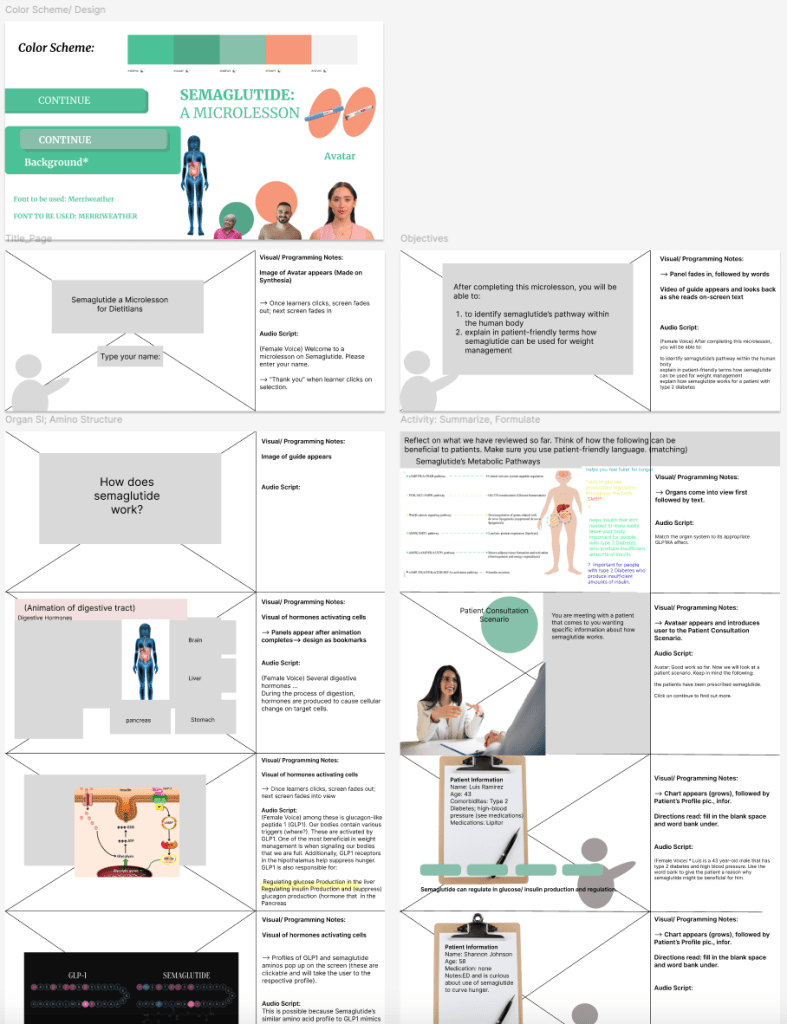
Interactive Prototype
I developed an interactive prototype to collect feedback on the functionality of the project before diving in and developing the project in full. The prototype included the title page, lesson topics, objectives, overview, activities, and the end page.

Full Development
After collecting feedback from the SME, it was time to develop the project in full. The project consists of 12 scenes designed in Photoshop. Synthesia was used to create the avatar. These files were then transferred to Articulate Storyline 360 to create the final product.
 camilondono.com